

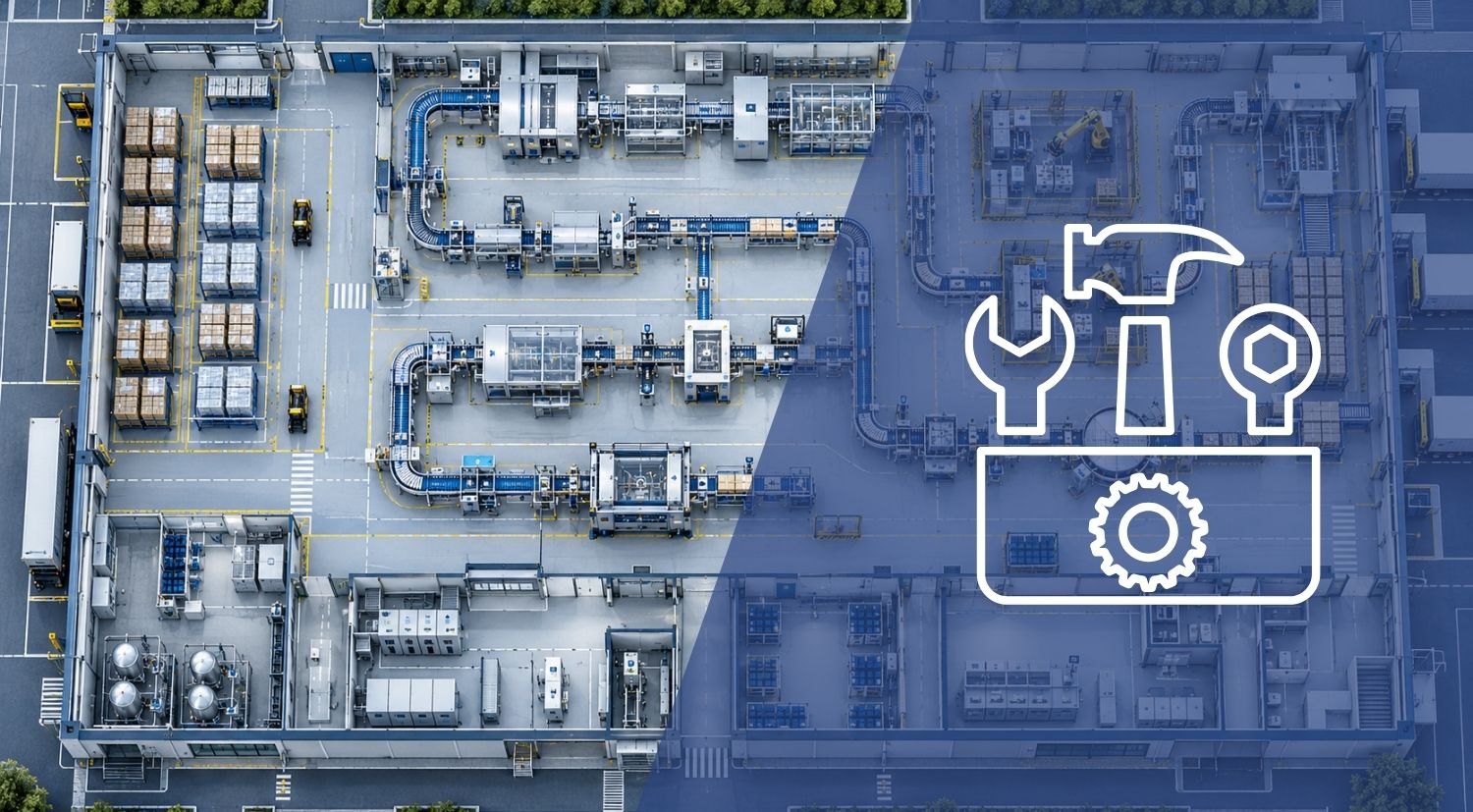
Find out how the Machinery Regulation 2027 affects the purchase of industrial equipment, its safety and its integration into production lines.
The purchase of new industrial machinery is a decision that affects the productivity, safety and growth potential of any production line. From 20 January 2027, companies purchasing new equipment will need to take into account a significant change in European regulations.
Regulation (EU) 2023/1230 on machinery will replace the current Machinery Directive 2006/42/EC and introduce new requirements relating to safety, automation, software and the integration of industrial machinery.
For companies planning to invest in labelling, packaging, checkweighing, inspection or automation equipment, being aware of these changes will enable them to make more informed purchasing decisions and avoid problems during installation and commissioning.
1. The new European Machinery Directive: what it is and when it comes into force
Regulation (EU) 2023/1230 lays down the essential health and safety requirements with which machinery and certain related products must comply in order to be placed on the market or put into service in the European Union.
Although the current Directive 2006/42/EC already regulates key safety aspects, the new Regulation updates the regulatory framework to bring it into line with technological developments in the industry, particularly digitalisation, connected control systems and advanced automation.
One of its main differences is that it is a regulation that is directly applicable in all EU countries, without the need for transposition into national law.
What are the most significant changes?
The main new features are:
- Seguridad digital y ciberseguridad: se incorporan requisitos para proteger la maquinaria frente a alteraciones del software o de los sistemas de control que puedan comprometer su funcionamiento seguro.
- Software and intelligent systems: new risks arising from digital and automated functions, and from certain systems with autonomous behaviour, are being considered.
- Substantial modifications: this clarifies when a modification to an existing machine may require a new conformity assessment.
- Digital documentation: certain documents, such as user instructions and EU declarations of conformity, may be provided in electronic format subject to specific conditions.
- Conformity assessment:the applicable procedures are updated and the treatment of certain categories of higher-risk machinery is reviewed.
These new developments do not replace the traditional mechanical and electrical safety requirements, but rather extend them to address the risks posed by modern industrial machinery.
The key date is 20 January 2027, when the new Regulation will come into full effect. Until then, Directive 2006/42/EC remains the main framework for placing machinery on the European market.
2. How does the new Regulation affect the purchase of industrial machinery?
For a company considering the purchase of new equipment, one of the most important issues is determining which regulations will apply to the machinery.
The criterion does not depend solely on when the contract is signed or the order placed, but on when the machine is placed on the European Union market or put into service, depending on the circumstances of each transaction.
What happens if you buy a machine in 2026 and it is installed in 2027?
Let’s imagine that a company purchases an automatic labelling machine in November 2026, but its installation is scheduled for February 2027.
In that case, it will be necessary to determine whether the machine was lawfully placed on the EU market before 20 January 2027 or whether that first placing on the market, or its putting into service where that criterion applies, took place after that date.
Therefore, the date of the invoice, the order or the date of manufacture does not, in itself, determine the applicable regulations.
To avoid any uncertainty, it is advisable to check with the supplier which regulatory framework will apply to the equipment and how its conformity will be documented.
Does machinery purchased before 2027 need to be replaced?
No. The entry into force of the Regulation does not mean that companies must automatically replace the machinery they already have installed.
Equipment lawfully placed on the market in accordance with the previous regulations may continue to be used, provided that it complies with the relevant safety and maintenance requirements.
Nor does the new Regulation require a general retroactive adaptation of all existing machinery.
Eso sí, cuando una empresa decida modificar de manera importante una instalación, deberá analizar si los cambios pueden constituir una modificación sustancial, una cuestión que abordaremos más adelante.
3. Seguridad, automatización y ciberseguridad: qué cambia en los equipos industriales
Today’s production lines are increasingly incorporating electronic systems, industrial communications, programmable controls and remote connections.
These technologies facilitate automation, production monitoring and maintenance, but they also introduce risks that must be addressed by the regulations.
The new Regulation expressly provides for protection against accidental or deliberate corruption of certain digital systems, where this may affect the safety of machinery.
What does this mean on a production line?
Let’s consider a packaging line featuring an automatic labeller, a checkweigher and equipment connected to the overall production system.
If an incorrect modification to the software or to certain parameters could cause a dangerous movement, disable a safety feature or alter a safety function, that risk must be analysed and controlled.
Depending on the machine’s specifications, measures such as the following may be necessary:
- Control who can change security-related settings.
- Protect control systems against unauthorised changes.
- Manage software updates effectively.
- Protect communications that may affect security functions.
- Ensure that the stop functions and protective devices remain effective.
It is important to note that not all connected devices require the same cybersecurity measures. The specific requirements will depend on their functions, characteristics and risks.
What should the buyer look out for?
When comparing industrial equipment, it is worth finding out how software, updates, maintenance access and connections to other production systems are managed.
It is also advisable to ask the supplier what happens when the control system is updated or the machine’s settings are changed.
The aim is to ensure that safety functions remain effective throughout the equipment’s service life, even when technical interventions or software modifications are carried out.
Cybersecurity thus becomes part of industrial safety in those digital systems where any disruption could lead to dangerous situations.
4. Integration of new machines into existing production lines
Many industrial investments do not involve replacing an entire production line, but rather incorporating new equipment to improve productivity, automation or control capabilities.
For example, a company in the food sector may decide to install an automatic labelling machine, incorporate a machine vision system or add a checkweigher to a line that is already in operation.
In such cases, as well as checking that the new machine complies with individual regulatory requirements, it is necessary to assess how its introduction affects the safety of the entire installation.
Security doesn’t stop at each machine
When several teams work together, risks may arise that do not exist when they operate independently.
It is important to analyse aspects such as the coordination of movements, safety measures in transfer areas, emergency stops and communication between the various control systems.
For example, if a new labelling machine is connected to an existing conveyor belt, it must be ensured that both can operate safely, even in the event of a stoppage, an incident or maintenance work.
The individual CE marking on each piece of equipment does not, in itself, demonstrate the conformity of an entire production line when the whole constitutes an assembly of machinery subject to its own assessment.
When is a change considered to be substantial?
The Regulation sets out criteria for identifying substantial modifications made to machinery that has already been placed on the market or put into service.
A physical or digital modification may be regarded as such if it was not intended by the manufacturer, creates a new hazard or increases an existing risk, and requires certain additional protective measures as set out in the legal definition.
Where these conditions are met, it may be necessary to carry out a new conformity assessment of the machinery concerned.
However, installing new equipment or carrying out an upgrade does not automatically mean that there is a substantial change. Each intervention must be assessed on the basis of its specific characteristics and its impact on safety.
For companies that are expanding or modernising their facilities, it is particularly important to define, from the outset, the scope of the project, the integration requirements and the responsibilities of the various suppliers.
5. CE marking and documentation: what the buyer should check
Al adquirir maquinaria industrial, el marcado CE sigue siendo uno de los elementos fundamentales para verificar que el equipo se ha sometido al procedimiento de evaluación de conformidad correspondiente.
Mediante el marcado CE, el fabricante indica que la máquina cumple los requisitos aplicables de la legislación europea que exige dicho marcado. No obstante, el marcado CE no es, por sí mismo, un certificado de calidad ni garantiza que una máquina sea adecuada para cualquier aplicación o instalación.
For this reason, before accepting a piece of equipment, the purchaser must check that they have the documentation required to use, maintain and integrate it correctly.
What documentation must accompany a machine?
Among the most important documents are:
- EU Declaration of Conformity: this identifies the machine, its manufacturer and the applicable legislation, and sets out the relevant declaration of conformity.
- Instructions for use:these explain how the product works, the installation requirements, the limitations on use, the residual risks and the safety measures.
- Technical information for installation and maintenance:this includes diagrams, instructions and any other information required to carry out the intended operations safely.
- Information regarding integration: when a partly completed machine intended for incorporation into an assembly is supplied, the EU Declaration of Incorporation and the relevant assembly instructions must be provided.
The new Regulation allows the instructions for use to be provided and access to the EU declaration of conformity to be facilitated in digital format, provided that the specified conditions are met.
In the case of digital instructions, the manufacturer must allow them to be downloaded and saved, ensure they remain accessible for the required period, and provide a free printed copy upon the purchaser’s request at the time of purchase, within the specified timeframe.
It is therefore advisable to check, prior to delivery, that the documentation is available in the language required in the country of use and that it corresponds exactly to the model and configuration purchased.
6. What to check before investing in new machinery for your production line
The entry into force of the new Regulation provides a good opportunity to review the criteria used in the selection of industrial equipment.
Rather than simply comparing production speeds, performance or prices, it is worth analysing certain aspects that may affect the safety, installation and future use of the machinery.
6 points to check before purchasing machinery to ensure compliance with the new European regulations
| What you should ask the supplier | |
|---|---|
| Regulatory compliance: | |
| Compatibility | Can it be integrated with the existing equipment and control systems on my production line? |
| Safety | What risks have been assessed and what safety measures does the machine incorporate? |
| Connectivity and software | |
| Documentation | What declarations, instructions and technical user documentation will be supplied with the machine? |
| Future expansions |
These questions are particularly relevant when purchasing equipment that needs to be connected to other machines.
For example, when incorporating an automatic labelling system into a packaging line, it is not enough simply to check that it achieves the required application speed. Consideration must also be given to how it integrates with the conveyor, its coordination with other equipment, and the overall safety conditions of the system.
Del mismo modo, al instalar una controladora de peso, un detector de metales o un sistema de visión artificial, es recomendable estudiar cómo interactuarán con los mecanismos de rechazo, las cintas transportadoras y los sistemas de gestión de la producción.
The importance of choosing machinery with the future in mind
An industrial investment must meet current production needs, but also allow for future adjustments.
Companies may need to increase their production capacity, introduce new packaging formats, improve inspection systems or connect equipment to industrial management platforms.
For this reason, in addition to regulatory compliance, it is advisable to assess the machine’s flexibility, its integration capabilities and the options for upgrading and maintenance.
Choosing machinery with these features can facilitate future upgrades and reduce the technical difficulties associated with expanding production lines.
7. Preparing production lines for 2027: safety and operational continuity
The application of Regulation (EU) 2023/1230 should not be interpreted as a general obligation to refurbish existing industrial facilities.
However, it does introduce requirements that should be borne in mind when planning new investments, particularly in projects involving the automation, expansion and modernisation of production lines.
For companies considering the purchase of machinery, the most important thing is to anticipate the applicable regulatory requirements, correctly identify integration needs and select equipment that can be used safely and efficiently.
Safety, reliability and adaptability must be taken into account when making a purchasing decision, alongside productivity targets and return on investment.
MarCoPack: solutions for the automation and modernisation of production lines
At MarCoPack, we develop in-line labelling and printing solutions, checkweighing, metal detection and machine vision systems, tailored to the needs of various industrial sectors.
We design and integrate equipment to improve automation, product identification, and inspection and control processes, taking into account the specific characteristics of each facility.
Are you planning to purchase new machinery or modernise a production line?
Contact our technical and sales team. We’ll help you analyse the requirements of your facility and find a solution that meets your production targets.

Alejandro Serrano Romero
Exports Executive at MARCOPACK


